
You have probably experienced this while scrolling through Instagram or TikTok: a specific sound or clip plays, and you freeze. Without realizing it, you stare blankly at your phone screen for minutes while your mind drifts into the past. It feels like being suddenly pulled back in time, bringing back a flood of memories you might not have recalled in years, as if walking deep into the archives of your brain's memory library to dust off forgotten files.
The reason a specific sound can instantly unlock long-dormant memories lies in how the brain processes familiar acoustic cues. These are sounds you heard during very particular moments, and hearing them again recreates the entire scene in vivid detail.
For instance, if you were playing outside with childhood friends while a neighbor ran a lawn mower with a distinct mechanical rumble, hearing that exact mower sound years later instantly triggers those memories. It goes beyond mere recall: in those moments, you genuinely feel like you have traveled back in time, reliving physical sensations from that era, such as running barefoot on park grass or splashing in waves at the beach, even while sitting on your couch listening to a clip on your phone.
The primary biological reason is that auditory neural pathways have a direct shortcut to the deepest emotional centers of the brain. While visual inputs undergo complex, analytical processing across the visual cortex, sound waves pass quickly from the brainstem straight into the amygdala (the emotion center) and the hippocampus (the memory archive). Because of this direct wiring, hearing just a few notes of an old melody or a familiar mechanical chime unleashes a sudden rush of emotions and memories without conscious effort.
Below are a few iconic, deeply nostalgic audio clips to test how vividly your brain links sound to long-lost memories.
Why Does an Old Song Throw Us Years Back in Time?
When you hear an old song after years away, your brain does not pause for logical processing or lyric analysis. Music and rhythm are woven directly into the fabric of the events you experienced in the past. If you spent an entire summer listening to a specific track on repeat, your brain encoded every detail of those days onto those exact frequencies, from the scent of the air and the outdoor temperature to the people beside you. Replaying that music acts like turning a key in a lock cut specifically for that era.
The big difference between songs and other triggers is that music activates multiple regions across both brain hemispheres simultaneously. Because of this, recalling an old song is never just a passing thought; it reproduces the entire emotional atmosphere and heart-rate rhythm tied to that exact point in time. Neuroscientists call this state-dependent memory, meaning that alongside the melody, your nervous system relives the internal state you were in years ago.
Ultimately, melodic structure and repetition give music a far deeper staying power than ordinary daily events. An old song is typically heard dozens of times across heightened emotional moments, and that repetition keeps its neural pathways extraordinarily durable and intact. When those same notes hit your ears after years of silence, your brain lights up those old neural pathways without wasting a split second, tossing you backward in time completely involuntarily.
How Sounds Find the Brain's Shortcut to Memories
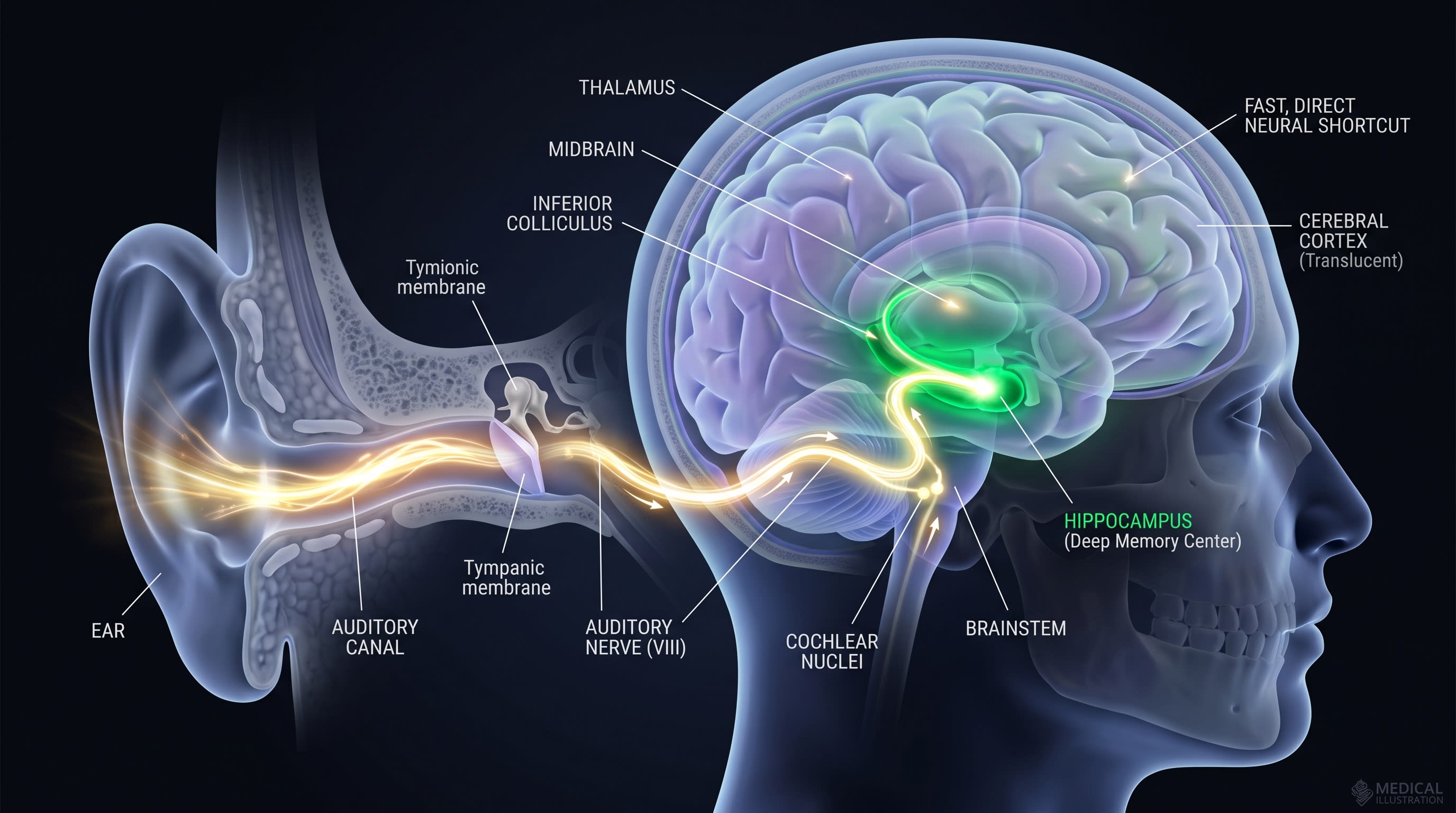
The human auditory system is wired from the ground up to establish an exceptionally fast connection with the brain's ancient, deep structures. When a sound wave strikes the eardrum, physical vibrations convert instantly into electrical signals that travel straight through the auditory nerve to the brainstem. Unlike many other senses that must first be dissected and evaluated by the analytical cerebral cortex, this electrical flow bypasses unnecessary red tape and routes straight to the gates of the hippocampus, the core region responsible for logging and retrieving memories.
This short, direct route has its roots in early human survival. Out in the wild, hearing a branch snap or the low growl of a predator meant you had to recall previous danger and run in a fraction of a second, without stopping for logical deductions. To preserve human life, the brain wired the auditory nerve through the shortest possible pathways directly into memory centers and emergency reaction hubs. Today, while hearing a familiar sound rarely involves a life-or-death situation, that exact high-speed neural circuit causes dormant memories to jump to the surface before logical thoughts even begin to take shape.
Another remarkable aspect is that sound waves travel along this shortcut with minimal loss of information. From the moment the ear registers a distinct sound, like a bell, a familiar footstep, or the hum of an old machine, to the instant the signal lands in your memory archive takes only tens of milliseconds. This blazing transmission speed is why, before you even consciously recognize the sound source or identify it by name, the entire scene and memories from your past already materialize in your mind in complete detail.
The Fascinating Difference in How the Brain Processes an Image vs. a Sound
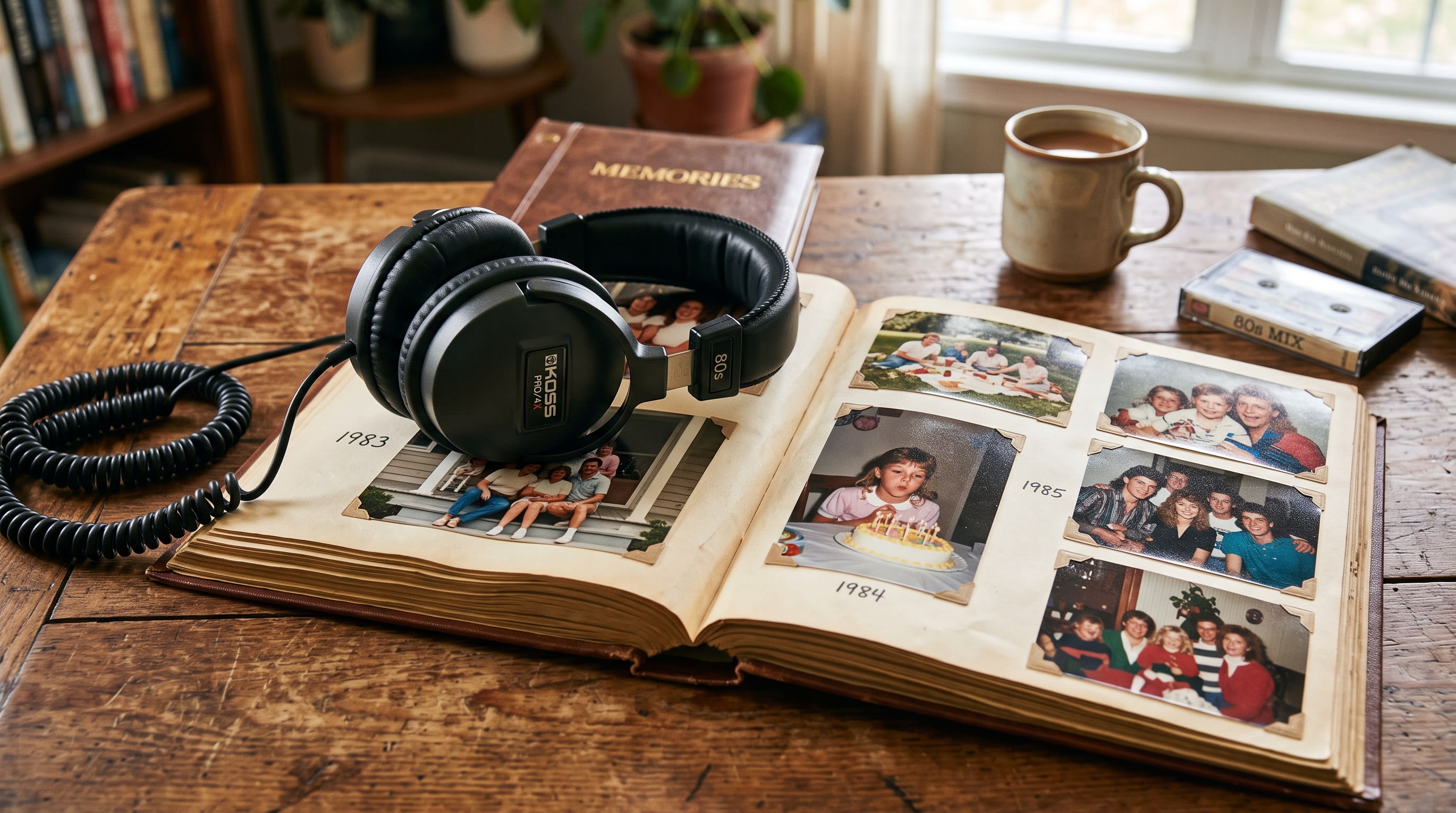
When you look at a photograph, your eyes project a massive volume of scattered data straight to the visual cortex at the back of your brain. To make sense of the image, the brain must reconstruct and evaluate edges, colors, lighting angles, and spatial depth one by one. This analytical loop turns viewing a picture into a conscious, attention-driven process where you inspect the details of the frame first, and only then does the mind decide whether that face or scenery connects to your past.
In contrast, audio processing is fluid, time-dependent, and instantaneous. Unlike a photo, where all the information sits laid out before you at once, sound unfolds moment to moment through time, forcing the brain to track shifting frequencies and rhythms continuously. This dynamic nature means audio data is handled immediately through a very different mechanism; the brain does not need to break down visual layers, allowing the acoustic wave to penetrate the deep subconscious as an uninterrupted, unmediated stream.
Another major difference lies in how the mind catalogs these two senses. Images parade across our eyes daily in millions of different forms, and heavy visual clutter forces the brain to build strict filters to discard repetitive input. As a result, an old photograph is often perceived as an external object held at an emotional distance. Sounds, however, fill the physical space around us and resonate directly through the body, recreating the sensation of physical presence far more intensely than any still picture ever could.
This fundamental wiring difference is why recalling a memory through sound happens several times faster than through an image. With visual processing, the brain deliberately calls up a memory by focusing on the picture; with audio, the memory imposes itself on the brain. You can look away from a photo to break an emotional link, but your ears have no eyelids to block out the immersive pull of a nostalgic melody or familiar chime. In a fraction of a second, sound waves take over the brain completely.
The Role of Emotions in Why Sounds Linger So Deeply in Our Memory
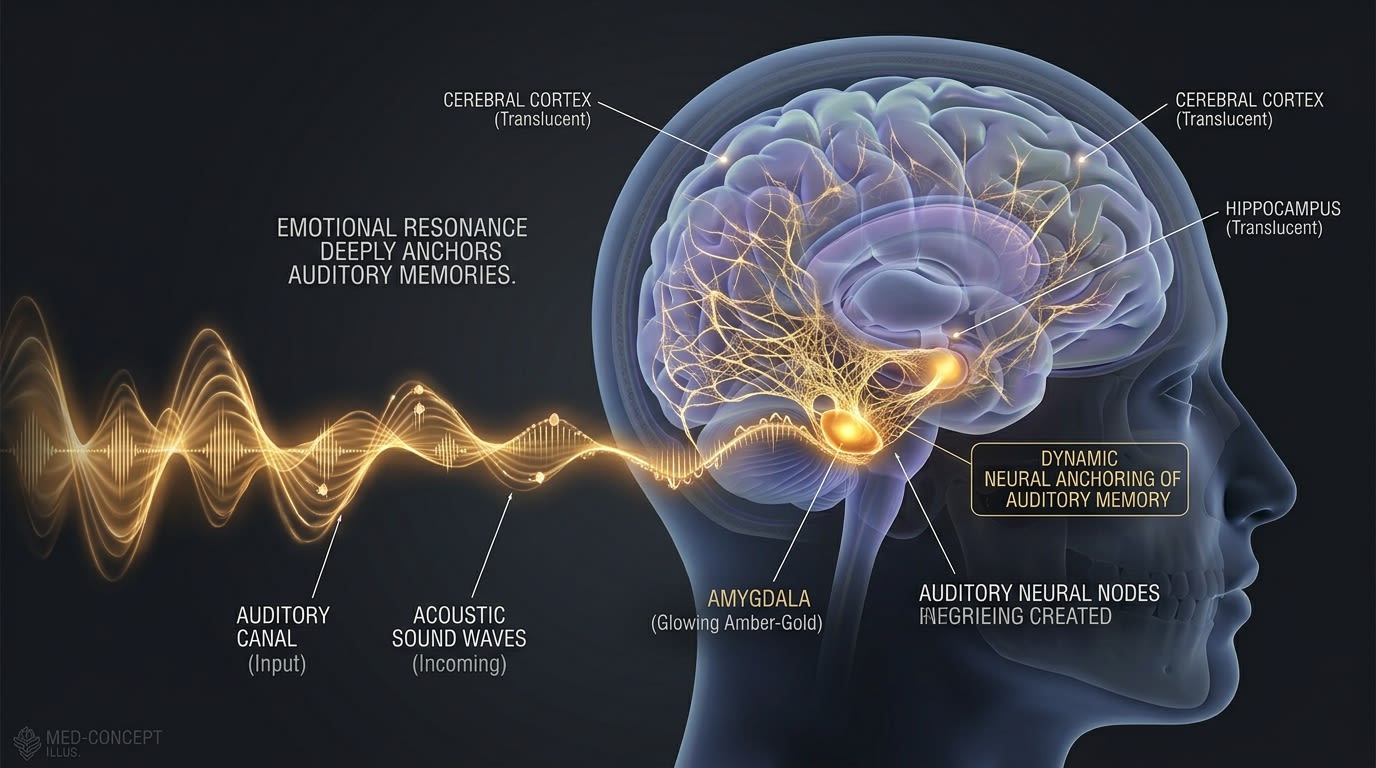
Sounds are the most potent triggers for awakening primal emotions inside the human brain. Deep within the limbic system lies an almond-shaped structure called the amygdala, whose primary job is to gauge the emotional weight of events and fire off immediate responses. Auditory pathways share an intimate, unmediated link with the amygdala, which is why every meaningful sound you hear throughout life is tagged instantly with an emotional label like profound joy, nostalgia, or fear.
When an event occurs alongside a burst of intense emotion, the brain treats it as vital for survival and floods the system with neurochemicals like dopamine and adrenaline. These chemical surges act like waterproof ink on the pages of the mind, locking down the acoustic details of that moment with remarkable sharpness. That is why the laugh of a childhood friend, the distinct chime of a clock in your family home, or a song playing during a tough heartbreak remains pristine in your memory decades later, feeling just as vivid as day one.
A unique hallmark of auditory memory is that the emotional feeling surfaces well before the logical facts do. When a sound carrying heavy emotional weight reaches your ears, your chest might tighten or you might feel a sudden rush of lightness while your brain is still searching for the sound's exact name or the year it happened. In practice, the brain treats the emotional imprint as the most secure backup copy of a memory, making sure your emotional link to the past never breaks.
This continuous overlap between acoustic input and emotion explains why sound memories resist the wear and tear of time so effectively. The cognitive regions that store names, dates, and addresses naturally fade over the years, but the bond between the amygdala and auditory patterns is often among the very last to deteriorate, even in degenerative memory conditions. Fastening a sound directly to emotion transforms a raw memory from cold, dry data into a living, permanent experience.
A Simple Two-Minute Experiment to Test Your Brain's Time Machine
To experience the power of this mechanism firsthand, you do not need complicated laboratory equipment. All it takes is two minutes of quiet, a pair of headphones, and closing your eyes to shut off visual input so your brain cortex can focus entirely on acoustic vibrations. When visual distractions fade, the mind devotes its entire bandwidth to incoming auditory cues, driving the neural shortcut straight to the hippocampus at full throttle.
In this state, the instant a familiar sound plays, your neurons fire in a split second. Without any conscious effort to remember, you suddenly find yourself standing right in the middle of a past scene. Let us test your brain's personal time machine right now: close your eyes, hit play on one of the four audio clips below, and see which year and setting your mind pulls you back into.
Audio 1: Windows XP Startup Sound
This short, iconic audio cue brings back memories from the late 1990s and 2000s, the era of bulky CRT monitors, internet cafés, and our very first experiences exploring personal computers. Hearing this swelling chime sparks strong emotions because for an entire generation, it signaled the start of free time, classic video games, and the thrill of stepping into a fresh digital world.
Audio 2: Dial-up Modem Handshake Sound
This sequence of static hiss, drawn-out screeches, and uneven beeps recreates the feeling of getting online during the early days of home internet. The reason it sparks such a visceral reaction is the sheer anticipation it etched into our brains. Back then, every time we heard these bizarre frequencies, our minds were eagerly waiting to connect to an uncharted world. Hearing it today instantly resurrects that sweet, restless feeling of anticipation.
Audio 3: The Classic Nokia Ringtone (Nokia Tune)
This simple, polyphonic ringtone immediately brings back memories of the late 1990s and 2000s, the era of plastic snap-on phone cases, early mobile phones, and strict character limits on text messages. The brain reacts sharply to this pattern because in those days, hearing a mobile phone ring was a rare, exciting event. This short melody remains tied directly to curiosity, connection, and heartfelt messages from the past.
Audio 4: Rapidly Flipping Through Pages of a Fresh Book or Notebook
The crisp rustle of newly printed paper pages immediately paints a picture of the first days of school in autumn, the distinct scent of fresh textbooks, back-to-school stationery shopping, and noisy school hallways. The brain catalogs this gentle acoustic frequency as an enduring sensory marker of childhood. Repeated year after year during the excitement and nervous energy of a new school term, it holds an unbreakable link to seasonal change and fresh starts.
Audio 5: The Original PlayStation Startup Sound (PS1 Startup Sound)
This deep, atmospheric sound starts with a low, rumbling resonance and resolves into a shimmering chime. It immediately brings back memories of neighborhood gaming dens, scratched silver CD-ROMs, and spending hours glued to video games during the late 90s and 2000s. The reason this sound holds such lasting power is the sheer suspense it created: everyone held their breath to see if the console would actually read the disc. Hearing that second orchestral flourish was pure relief, signaling a hard-won victory and hours of getting lost in another world.
Audio 6: The Squeak of Swing Chains on an Afternoon at the Park
The rhythmic, metallic creak of old playground swings moving back and forth brings back cool summer evenings, melting ice cream, scraped knees, and staying out until dark. This sound cuts deep because our sensory memory links it directly to pure freedom from homework, the weightless feeling of floating midair, and the effortless carefree days of growing up outdoors with friends.
Audio 7: The Opening Whistle and Theme from Captain Tsubasa
This energetic melody and its driving horn lines immediately bring back sitting in front of bulky tube TVs with a cold drink, counting down the minutes until the afternoon news ended and the cartoon lineup began. Our brains stored this theme alongside pure childhood adrenaline, watching Hyuga's tiger shot and Tsubasa's drive shoot, back when life's biggest worry was whether the ball would finally hit the back of the net in the next episode.
Audio 8: Roller Coaster Wheels Clacking on the Tracks and Crowd Screams
The steady, mechanical clatter of a coaster car climbing up metal lift chains instantly brings back the scent of cotton candy, spinning neon carnival lights at night, and the lively buzz of an amusement park. This sound sticks with us because of the dual rush of fear and pure excitement experienced in youth. The brain registered that rhythmic upward climb as the peak of anticipation, right before the drop into total thrill.
Audio 9: A Whistling Kettle on a Kerosene Heater
The steady, soothing hiss and gentle whistle of a kettle resting on an oil heater during a chilly autumn or winter dusk brings back the cozy warmth of a grandparent's home, fogged-up window panes, and gathering around for hot tea. This sound is carved into the hippocampus with feelings of deep safety and comfort, serving as a lasting symbol of taking refuge in a cozy corner, family warmth, and escaping the cold outside.
How to Use the Magic of Sound for Focus and Storing New Memories

Now that we have seen how sounds take a direct shortcut into the depths of the hippocampus, we can put this natural brain mechanism to work in our everyday lives. Our brain constantly relies on external cues to know when to dive into deep work and when to unwind. When you choose a continuous, rhythmic acoustic background, like steady rainfall, brown noise, or calm instrumental music during study sessions, you are building an acoustic fortress that keeps your attention from scattering across random thoughts.
To harness sounds effectively for focus, the best approach is intentional neural conditioning. If you reserve a specific instrumental album or ambient track exclusively for studying or coding, your nervous system learns within days that hearing those sounds means entering a flow state. The brain quickly recognizes the acoustic cue and drops its initial friction to starting work. That means you do not have to burn willpower trying to force yourself to focus, because your ears have already cleared the path.
You can also use sounds as an enduring timestamp for life's biggest milestones. When you are on an unforgettable trip, enjoying a memorable evening with close friends, or working toward a major personal goal, assign a specific track or playlist to those days and play it often. By doing this deliberately, you anchor every sensory detail, view, and shared smile to the vibrations of that music, ensuring that years later, pressing play brings those pristine feelings back to life.
In addition, context-dependent acoustic recall works wonders during intense exam seasons or heavy project sprints. If you listen to a specific low-tempo lofi track while reviewing complex material, recalling that rhythm or listening to the track before a test or presentation helps pull information out of long-term memory much faster. Because the learning and retrieval contexts share the exact same acoustic anchor, the brain traces those established neural pathways with minimal friction.
Finally, mindfully curating your sound environment helps you build cleaner, sharper memories. In a noisy world filled with traffic, sudden notification dings, and intrusive background clutter, carving out islands of quiet or intentionally tuning into natural sounds like wind or flowing water gives your nervous system space to rest and recharge. By protecting your ears and treating them to calming soundscapes, you not only elevate your daily output, but also fill your mental archives with vivid, rewarding moments that last.
Conclusion
Sounds are far more than fleeting vibrations in the air; they are direct keys to the deepest archives of our mind and spirit. Through millions of years of evolution, the human brain carved out a high-speed neural highway running straight from the ears to emotional control centers like the hippocampus and amygdala. This close bond allows a few basic musical notes or an everyday ambient sound from childhood to carry us backward in time faster and more vividly than any still picture or written word ever could. This remarkable wiring proves that auditory perception is never a passive receiver, but rather an active architect shaping our emotions, identity, and personal history.
Now that you understand how this acoustic time machine works, you can listen to your sound environment with greater intention. Moving forward, sound can be much more than random background noise: by mindfully curating your playlists and ambient backdrops, you can sharpen your daily focus and plant permanent acoustic anchors for life's most meaningful moments. Years down the road, simply pressing play will bring back the full warmth and detail of these very days.